

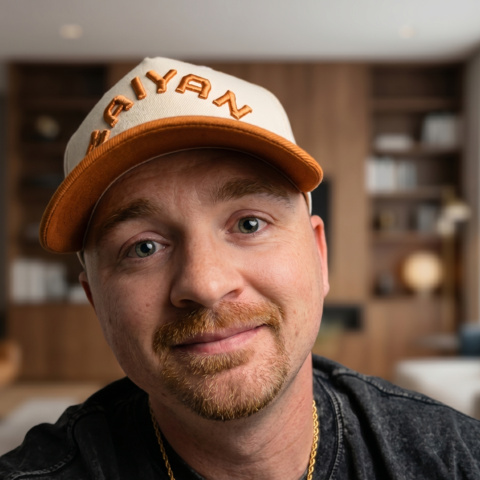
Entretien exclusif avec Joshua
« Kakarot », fondateur de QBCore
À quelques mois de la sortie de GTA 6, la scène FiveM s'apprête à une transition que personne ne sait vraiment lire. Joshua, connu en ligne sous le pseudo Kakarot, est l'une des rares voix qui peut en parler avec recul. Il a fondé QBCore, le framework open-source qui équipe aujourd'hui la majorité des serveurs roleplay de l'écosystème. Il a accepté de nous répondre.
Ancien réparateur de PC et monteur de configurations gaming sur mesure, arrivé sur FiveM par hasard en tant que joueur, Joshua revient avec nous sur sept ans de framework, sur ce qui a fait de QBCore le standard, et sur ce qui va, selon lui, survivre quand l'écosystème changera de moteur.

Peux-tu te présenter et expliquer comment tu es arrivé dans le monde de FiveM et du roleplay ?
« Je m'appelle Joshua, j'ai grandi avec la technologie comme une constante dans ma vie. Avant QBCore, je gérais ma propre activité IT, réparation d'ordinateurs, montage de PC gaming sur mesure, intervention directement chez les clients. Je n'étais pas un ingénieur logiciel au sens formel du titre, j'étais simplement quelqu'un qui comprenait les systèmes en profondeur et qui aimait résoudre des problèmes avec la technologie. J'ai en fait découvert FiveM de la même façon que la plupart des gens, en tant que joueur. Je ne cherchais pas une plateforme de développement, je cherchais juste quelque chose d'intéressant à jouer. Mais plus je passais de temps dans ce monde, plus je commençais à voir les manques. Les expériences que les server owners essayaient de créer dépassaient les outils disponibles pour les construire. Ce décalage entre l'ambition et la capacité, c'est ce qui m'a tiré du côté joueur vers le côté développeur. Une fois que j'ai commencé à construire, je n'ai jamais vraiment arrêté. Les mêmes instincts qui me rendaient bon pour diagnostiquer un système cassé ou pour architecturer un build PC sur mesure se sont remarquablement bien traduits dans la conception de framework. Au fond c'est la même chose, comprendre comment les composants s'assemblent et s'assurer que la fondation est assez solide pour supporter tout ce qui sera bâti dessus. »
Comment ton parcours s'est-il déroulé jusqu'à la création de QBCore ?
« Avant QBCore, ESX était essentiellement la seule option sérieuse de framework et il avait des limites qui me frustraient en tant que développeur. L'architecture me semblait datée et elle ne donnait pas aux server owners la flexibilité ni la performance dont ils avaient besoin pour bâtir les expériences qu'ils imaginaient. J'ai commencé par construire des outils pour résoudre mes propres problèmes, et il est finalement devenu clair que ce que je construisais était un framework à part entière. QBCore n'a pas été lancé avec une grande vision dès le premier jour, c'était le résultat de problèmes réels résolus de façon itérative jusqu'à ce qu'un ensemble cohérent émerge. Le tournant a été quand d'autres développeurs ont commencé à bâtir par-dessus et que la communauté autour s'est formée naturellement. »
Pourquoi QBCore est-il devenu si dominant ?
« Honnêtement je pense que ça s'est joué sur le timing, l'architecture, et la communauté. ESX était dominant depuis longtemps mais il portait beaucoup de décisions héritées difficiles à contourner. QBCore est arrivé avec une fondation plus propre, pas de dépendance base de données pour les données statiques, des métadonnées de joueur plus accessibles, de meilleures performances pour les gros serveurs. Mais le côté technique seul n'explique pas la domination. La communauté qui s'est formée autour était sincèrement collaborative. Les développeurs construisaient des resources, partageaient des connaissances, amélioraient l'écosystème ensemble. C'est cet effet réseau qui a transformé un bon framework en le standard. »
Cette position a-t-elle changé ta perspective ou ton processus de décision ?
« Significativement. Quand tu commences quelque chose comme un projet personnel, tu prends des décisions vite et pour toi-même. Quand des milliers de serveurs dépendent de ce que tu construis, chaque décision porte un poids pour lequel tu n'avais pas signé. Tu deviens plus conservateur sur les breaking changes, plus délibéré sur la documentation, plus conscient de la façon dont tes choix se répercutent sur des gens que tu n'as jamais rencontrés. Ça m'a appris énormément sur la responsabilité qui vient avec le fait de bâtir une infrastructure dont d'autres dépendent, quelque chose qui a façonné ma manière d'aborder les problèmes d'ingénierie bien au-delà de FiveM. »
Comment analyses-tu l'évolution du roleplay sur FiveM ces dernières années ?
« Le plafond de ce qui est possible a monté de façon spectaculaire. Quand j'ai commencé, un serveur bien tenu avec des systèmes de jobs basiques, c'était impressionnant. Aujourd'hui des server owners construisent des économies complètes, des systèmes juridiques, des marchés immobiliers, et des écosystèmes sociaux qui rivalisent en complexité avec des jeux standalone. La barre de ce que les joueurs attendent a monté en même temps que les outils disponibles aux développeurs. QBCore a contribué à rendre cette évolution possible mais c'est la créativité de la communauté qui l'a vraiment portée. Les développeurs ont poussé le framework plus loin que ce que j'avais anticipé quand je l'ai construit. »
Avec l'arrivée de GTA 6, va-t-on vers une continuité ou une rupture avec le passé ?
« Je pense que ça dépend entièrement de ce à quoi ressemblera la relation Rockstar / FiveM / cfx.re à l'avenir. La communauté roleplay a prouvé qu'elle avait une vraie endurance, elle a survécu à des années d'incertitude et a continué de grandir. Si un support de modding existe sous une forme ou une autre pour GTA 6, je crois que la communauté transitionnera et reconstruira. Les gens qui ont bâti ces écosystèmes ne vont nulle part, ils auront juste une nouvelle toile. La rupture ne sera pas avec la communauté ni avec la culture, elle sera avec les outils et frameworks spécifiques bâtis sur l'architecture de GTA 5. Tout sera reconstruit. Ce n'est pas une mort, c'est une évolution. »
Où en est QBCore aujourd'hui et comment envisages-tu sa place quand GTA 6 sortira ?
« QBCore aujourd'hui est dans une position solide, activement maintenu, largement adopté, avec un écosystème de resources et de développeurs qui s'auto-entretient. À l'approche de GTA 6, la réponse honnête c'est qu'aucun framework GTA 5 ne migrera directement. Ce qui migrera, c'est la connaissance, les relations communautaires, et les patterns d'architecture. L'héritage de QBCore sera dans les développeurs qu'il a façonnés et dans les standards qu'il a posés sur la manière dont un framework FiveM doit être bâti. Ce qui viendra ensuite sera informé par ce que QBCore a établi. »
Travailles-tu sur des stratégies pour anticiper la transition vers GTA 6 ?
« La transition est quelque chose que la communauté est en train de penser collectivement. La chose la plus intelligente qu'un développeur ou un server owner puisse faire en ce moment, c'est d'investir dans la compréhension des principes sous-jacents plutôt que d'être dépendant d'implémentations spécifiques. Les patterns qui ont fait fonctionner QBCore, séparation propre des responsabilités, communication événementielle, conception modulaire des resources, sont transférables peu importe la plateforme qui viendra ensuite. Mon focus s'est déplacé vers du développement de jeu plus large, ce qui me met en bonne position pour contribuer à ce à quoi ressemblera la prochaine génération de cet écosystème. »
De quoi es-tu le plus fier dans le parcours de QBCore ?
« Du fait qu'il ait survécu à mon implication directe. Le fait qu'en 2026, des développeurs le maintiennent encore, construisent dessus, écrivent des tutoriels pour lui sans que je le pilote, c'est la mesure la plus vraie de si tu as bâti quelque chose de réel. N'importe quel projet peut survivre tant que son créateur l'entretient. Ceux qui comptent vraiment continuent tout seuls. Au-delà de ça, les développeurs qui ont fait leurs armes sur QBCore et qui ont ensuite construit de vraies carrières, ça compte plus pour moi que n'importe quelle métrique. »
Quel message aimerais-tu transmettre aux server creators et aux développeurs aujourd'hui ?
« Construis avec intention. L'écosystème FiveM a récompensé les gens qui l'ont abordé comme de vrais ingénieurs plutôt que comme des hobbyistes, et c'est vrai de n'importe quelle plateforme. Si tu es développeur, prends ton travail au sérieux, les compétences que tu construis ici sont réelles et transférables. Si tu es server owner, investis dans la compréhension de ta stack plutôt que de simplement consommer des resources. Les serveurs qui se sont démarqués n'étaient pas ceux qui avaient le plus de scripts, c'étaient ceux où quelqu'un comprenait vraiment ce qu'il était en train de construire, et pourquoi. »
Quels ont été les moments les plus difficiles et quels conseils donnerais-tu à ceux qui débutent ?
« La partie la plus dure n'a jamais été les problèmes techniques, c'était le poids des attentes de la communauté sans rémunération, sans équipe, sans obligation de continuer. Les mainteneurs open source portent un fardeau que les utilisateurs voient rarement. Il y a eu des périodes où le volume d'issues, de pull requests et de demandes communautaires était sincèrement insoutenable pour une seule personne. Le conseil que je donnerais à quiconque débute, c'est de poser des limites tôt. Définis ce que tu vas supporter et ce que tu ne vas pas supporter. Construis en public, mais protège ton temps en privé. Et ne laisse pas la dépendance de la communauté à ton travail devenir ton identité, parce que le jour où tu auras besoin de prendre du recul, cette identité deviendra une cage. »
Bonus, projets parallèles ?
« Au-delà de QBCore, je travaille dans Unreal Engine, en appliquant les mêmes patterns architecturaux qui ont façonné QBCore, systèmes événementiels, conception de couche de scripting, frameworks d'API, au développement de jeu commercial. C'est une évolution naturelle de ce que j'ai bâti dans l'espace FiveM, et ça m'a confirmé que les principes sous-jacents d'une bonne ingénierie de plateforme se traduisent à travers n'importe quel moteur ou environnement. »